
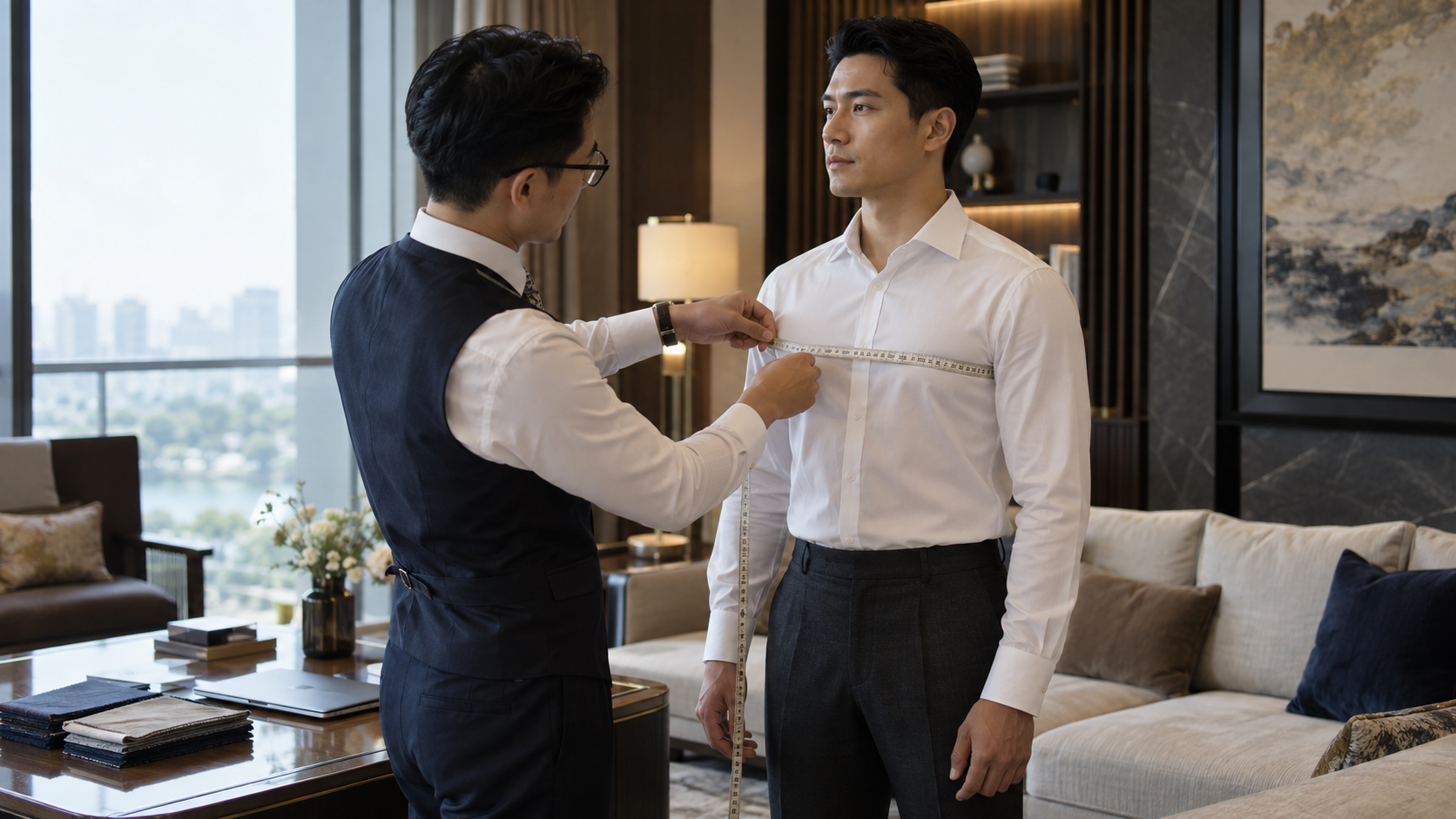
A fitting is the moment to check how the choices made in the design and measurements have been translated into a garment on your body. A suit may feel different from what you imagined when you stand, sit or move. Clear feedback at this stage helps the tailor judge what needs refining before the suit is finished.
In a made-to-measure experience, clients do not need to identify every technical issue themselves. What you need to do is describe how it feels and point out the areas that concern you. The fit should be assessed together with the person in charge, taking into account your natural posture, the design and the current stage of the garment.
Understand which stage the suit is at
Not every fitting takes place on a finished garment. Some methods include fittings at a basted stage or with parts not yet completed. That is an opportunity to assess and adjust, so you should not compare every detail directly with the look of a delivered suit.
Before the appointment, you can ask what the fitting will cover and which decisions will be reviewed. The tailor should also tell you which details are temporary. This keeps the discussion focused on the right issues, rather than judging quality from parts that have not yet reached the finishing stage.
Wear what you will pair with the suit
Your shirt and shoes affect how the whole look is judged, especially the collar, sleeves and trouser length. If the suit is for a specific event, ask in advance whether to bring the pieces you plan to wear. A choice assessed with the actual accessories is usually easier to confirm.
Keep to your natural way of dressing too: tuck your shirt in as usual and wear the trousers at the waist position you intend to use. If you want to change how you wear them after the fitting, discuss it, as the feel and proportions may differ. Do not stand in an unusual posture just to make the suit look smoother in the mirror.
Look at the shoulders and collar
Stand comfortably, let your arms hang naturally and let the person in charge observe from several angles. You can mention a feeling of heaviness, pulling or an area that does not sit as close as you would like. The tailor will look at the cause together with the shoulder and collar design and your posture.
There is no ideal shoulder for everyone. A structured shoulder and a soft shoulder are design choices that should be assessed against the agreed goal. When giving feedback, say what you notice and how you want it to feel, rather than asking to switch to another style just because of a reference photo.
Check the jacket body when buttoned
Button the jacket as instructed and look at the front, the back and both sides. If you notice obvious tension around the button point or discomfort in a normal posture, say so straight away. If there are wrinkles, look at their position and extent with the tailor; a wrinkle alone does not determine its cause.
Also look at the lapel line and jacket length in the context of the whole look. The aim is for the suit to deliver the proportions you chose and to meet your real needs. Clothes will crease when the wearer moves; expecting a perfectly smooth surface in every position can lead to unrealistic expectations.
Assess the trousers both standing and sitting
Well-fitting trousers should be checked at the waistband, seat, thighs and length. Sit on an ordinary chair, stand up and take a few steps. If you feel pressure, the waistband feels unstable or something causes discomfort, describe exactly which movement brings on that feeling.
The hem length should be judged with the shoes you plan to wear and the style you want. There are several options for how much the trousers break on the shoe, so there is no single rule to follow. If you often switch between types of shoes, mention it so the practical option can be considered.
Go through your everyday movements
You can reach forward, walk and sit as you would in a meeting. There is no need for extreme movements to test a suit if they are not part of how you will wear it. Focus on the situations you actually encounter and let the tailor observe how the garment responds.
If you drive often or work long hours at a desk, this is useful information. You can describe what was inconvenient about an older suit so the person in charge can consider the shape. Comfort should be understood within the limits of the type of garment and the chosen design, not as a promise of the freedom of movement of sportswear.
Record feedback before you leave
Before leaving the fitting, go over the points agreed for adjustment. Ask about the next appointment and how the result will be checked. If you decide to change a design detail, confirm whether it is feasible and how it affects the schedule or cost.
A productive fitting is a conversation built on observation and specific feedback. Alpha Tailor invites you to share how the garment feels in a natural way, so the made-to-measure process arrives at a suit that suits your body and the way you will wear it.