
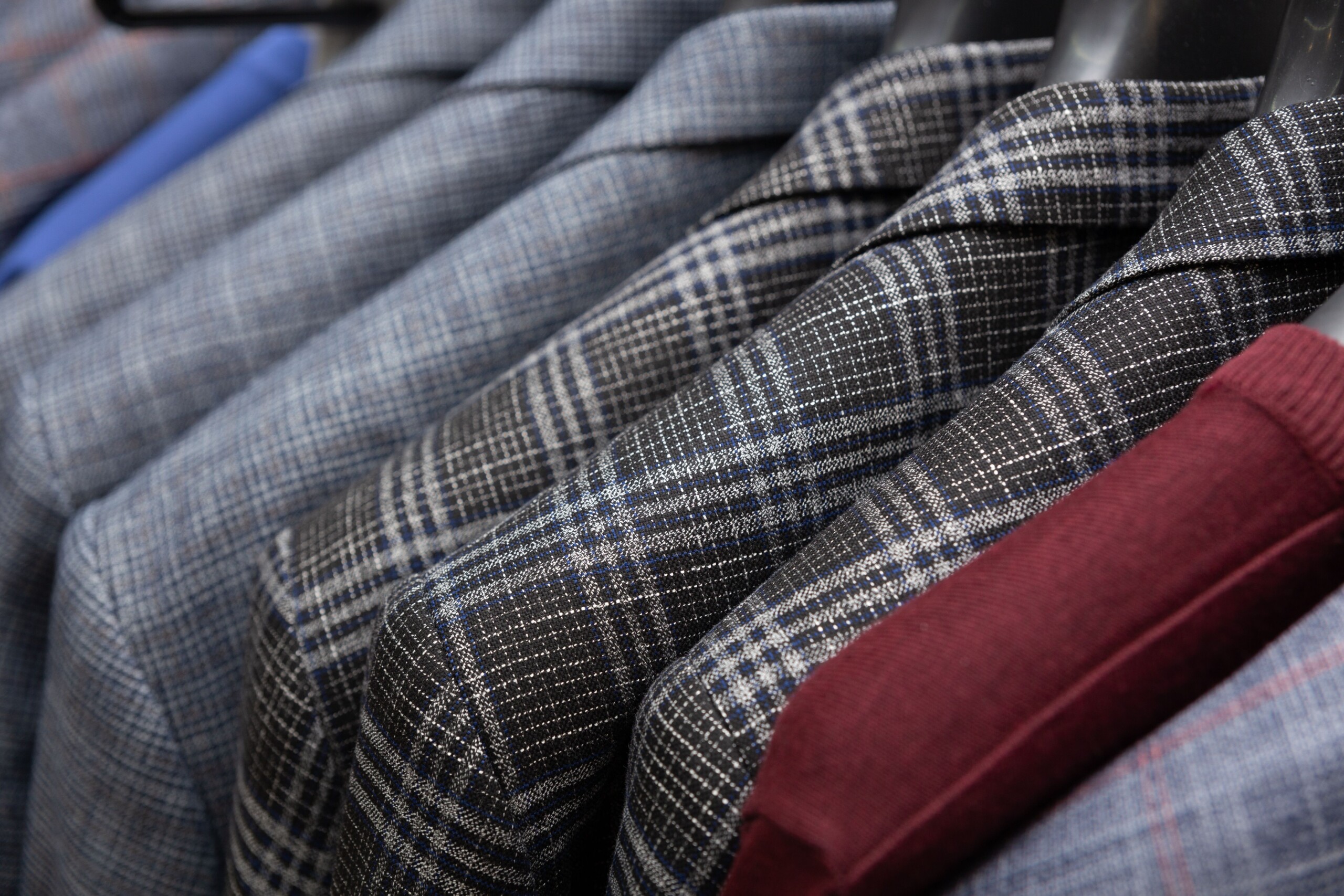
When researching tailored suits, you may come across terms such as bespoke, made-to-measure and handcrafted. These terms often appear together in content about luxury clothing, but they do not describe exactly the same method. Understanding the difference will help you ask the right questions before investing in a suit.
The starting point is to separate three factors: how the pattern is created, the degree of personalisation and the work done by hand. A suit with many handmade details does not by itself prove that the pattern was drafted from scratch. Conversely, adjusting a garment to your measurements does not tell you how many seams were sewn by machine or by hand.
Bespoke in the traditional sense
In traditional bespoke tailoring, the pattern is created individually for the client. A pattern is the set of shapes used to cut the parts of a garment; it translates measurements and an assessment of the figure into cutting lines that can be made up. Fittings allow the tailor to check and refine the result on the body.
The Savile Row Bespoke Association requires an individual paper pattern among its criteria for full members. The association also states that a two-piece suit typically involves at least 50 hours of handwork. These are the criteria of this organisation, not a certification that every tailor in the world automatically holds. When comparing services, ask which criteria a tailor actually applies rather than assuming that a name covers every requirement.
For clients, the practical meaning of an individual pattern is the ability to handle proportions and particular features of the figure while the pattern is being made. The result still depends on cutting skill, the fitting method and the communication between both sides. The word bespoke cannot replace looking at the garment, reading the service conditions and knowing who is responsible for making it.
Made-to-measure starts from a base pattern
Made-to-measure usually starts from an existing base pattern or block, which is then adjusted to the client's measurements and choices. For example, Huntsman describes its made-to-measure service as adjusting the house base pattern to the wearer. The scope of adjustment can vary between tailors.
This method can suit someone looking for a well-developed silhouette who wants personalisation within the scope of the service. Quality should not be judged only by whether a base pattern is used. You need to see how well that pattern suits your figure, which areas are adjusted and how re-fittings are organised.
So bespoke and made-to-measure are best understood as two approaches to making a garment. There is no basis for claiming that every bespoke suit is better than every made-to-measure suit. A sound decision should be based on your needs, budget, timeline and the tailor's real capabilities.
Which parts of the suit "handmade" describes
The word "handmade" should come with an explanation of the stages involved. Clients can ask about the construction of the canvas, the shaping of the lapels, the buttonholes or the finishing of specific areas. Do not assume that because one hand stitch is visible, the entire garment has been sewn by hand.
Likewise, "100% made-to-measure" can be understood in several ways: a garment made to an individual order, a fully personalised process or every seam sewn by hand. If a tailor uses this phrase, the scope should be made clear. Transparency helps clients understand the value being offered and avoid expectations that differ from what they receive.
A trustworthy description should state the pattern method, the planned fittings, the jacket construction and the handwork involved. This information is more useful than absolute adjectives. You can also ask to see sample garments and hear an explanation of the details that affect how the suit feels.
Questions to ask during a consultation
First, ask whether the pattern for your suit is drafted from scratch or adjusted from a base pattern. Then discuss the features of your body you want addressed: shoulder slope, differences between the two sides or your usual posture. The tailor should explain what can be adjusted within the service you choose, rather than simply promising that every issue will be solved.
Next, ask about fittings and alteration conditions. At which stages will you be fitted, what should you bring and how will changes be recorded? The number of fittings does not by itself create quality; what matters is what each fitting resolves and how the result is confirmed.
Finally, agree on the cloth, design, cost and delivery date. If a choice changes the timeline or budget, it should be discussed clearly before confirming. Specific answers will help you compare services on the same basis.
Choose by expectation, not just by name
If your priority is an individual pattern and an in-depth refining process, discuss directly which option meets that need. If you love an existing silhouette and want it personalised, explore the scope of made-to-measure. In both cases, how the suit feels and how the tailor works should be assessed together. Alpha Tailor positions itself as Premium Made-to-Measure Tailoring. When booking, you can ask for advice on the making method and the handwork of the service you are considering. A suit worth investing in begins with a clear agreement between the wearer's expectations and what the tailor can deliver.